Choosing Quartz Composite Sink Sizes for a Wholesale Range
How importers and distributors can build a quartz composite sink size matrix that covers real cabinet widths without creating overlapping SKUs, dead stock or container inefficiency.
Most first-time sink ranges fail for a boring reason: too many SKUs and not enough differentiation. A twelve-model range where six models fit the same cabinet is not a range, it is inventory. The better approach is to build a matrix from the cabinet widths your market actually installs, then let bowl configuration and finish carry the differentiation.
This guide covers how to build that matrix for quartz composite kitchen sinks, and which dimensions drive fitment problems after the container lands.
Start from cabinet width, not from sink width
The sink is downstream of the cabinet. Before choosing models, write down the base cabinet widths your channel installs most often. In broad terms:
- 600 mm base cabinets are the volume standard in many metric markets. A sink in the 500–560 mm width band usually fits with sensible clearance on both sides.
- 800–900 mm base cabinets support wider bowls, unequal double bowls and drainboard configurations.
- 33 inch (approx. 840 mm) sink-base cabinets are the common reference point in inch-based markets, with sinks typically quoted in a 30–33 inch width band.
Treat these as starting references and confirm them against your own market's cabinetry: cabinet construction, wall thickness and service voids vary by country, and a millimetre of variance at the rim becomes a fabrication problem at the cutout. The dimensions below are general industry references for range planning, not confirmed specifications for every KAIRUISHENG model; confirm each model's actual dimensions in writing before you order.
Choose bowl configuration before you choose size
Bowl configuration is the cheapest way to create genuine differentiation, because it changes what the sink does rather than how wide it is.
- Single bowl. The volume seller. Best for prep-heavy kitchens and for buyers who want one clean rectangle in the countertop. Confirm bowl depth carefully; a deep single bowl reduces the space available for the waste trap.
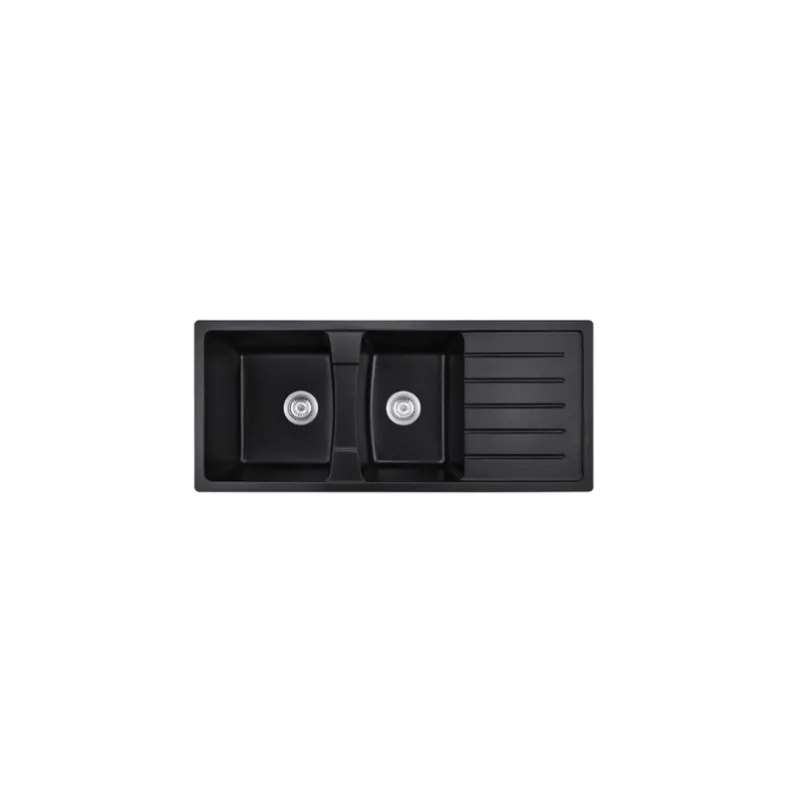
- Double bowl, equal. Still requested in markets where hand-washing and rinsing are done separately. Two workable bowls mean a wider overall sink, so it usually lands on 800 mm and above.
- Double bowl, unequal (1.5 bowl). A good compromise: a main bowl for washing plus a narrower bowl for prep or soaking, without the full width of an equal double.
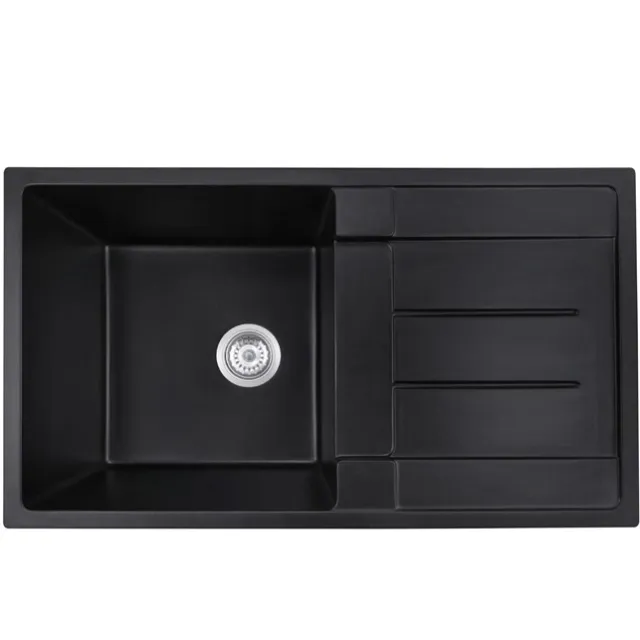
- Workstation / ledge models. A stepped ledge carries a colander, cutting board or drainer. These sell on accessories and margin rather than on price per unit, and they are the models most likely to justify a premium tier.
- Drainboard models. Efficient in markets where a draining surface next to the bowl is expected. They consume countertop length, so confirm the cutout against the cabinet run before committing to volume.
If your range covers more than three of these configurations, you are probably serving several different customer types. That is fine, but plan the price ladder deliberately instead of letting sizes overlap by accident.
Bowl depth, radius and drain: the three fitment killers
Width gets all the attention. Depth, radius and drain position cause the returns.
Bowl depth typically sits in the 180–220 mm band for composite sinks. Go deeper and you gain usable volume, but you lose clearance above the waste trap and you raise the weight of a full bowl. Confirm the depth against the trap type your market installs, and confirm it in writing rather than from a photo.
Corner radius determines whether your customer's fabricator can cut the countertop. Internal bowl radii commonly fall around R10 to R15, with tighter or square-cornered designs available on some models. Every radius needs a matching cutout template. If you cannot supply the template with the product, the installer will improvise, and improvisation is where chips happen.
Drain and overflow should be specified as a number: drain hole diameter, overflow type and overflow position. A sink that needs an overflow kit your market does not stock is a sink that sits in the warehouse.
Build the matrix in four tiers
A workable wholesale structure usually looks like this:
- Entry tier. One single bowl in one size, one or two colours, priced for volume replacement and private label.
- Core tier. Two or three sizes across single and unequal double, in the colour family your market actually sells.
- Premium tier. Workstation or ledge models with accessories, sold on function rather than price.
- Project tier. One or two larger formats for project and contract channels, where repeatability of colour matters more than novelty.
Four tiers, six to eight models, is usually enough to cover a distribution channel. If a new model does not open a new cabinet width, a new bowl configuration or a new price band, it is cannibalising an existing SKU.
Think in containers, not in pieces
Quartz composite sinks are dense. Unit weight drives pallet count, pallet count drives container fill, and container fill determines your landed cost per piece. Two consequences for range planning:
- Nesting and carton design matter commercially. Ask for carton dimensions and pallet configuration per model, and calculate how many units actually fit a 20ft and a 40ft container. A slightly smaller carton can change your cost per unit more than a small price concession.
- Mixed containers beat single-SKU containers. Once you know cartons per pallet, you can plan a mixed load that covers the range without holding excess of any one model.
Ask for gross weight per carton, not just net weight per sink. Freight is quoted on the gross.
Validate with a sample before you commit the range
Order samples of the two or three models that will carry the range, not of the whole catalogue. Then check:
- Colour consistency between the samples you receive and the colour code you were quoted, in daylight.
- Bowl depth and radius against the drawing, measured, not eyeballed.
- Whether the cutout template supplied actually matches the sink you received.
- Carton strength and internal protection, because composite edges chip in transit when packing is thin.
- Whether the accessories (colander, board, drain, grid) fit properly or were designed for a different model.
A range validated on three models is cheaper to correct than a container validated on eight.
Accessories are part of the size decision
On workstation and drainboard models the accessory set is not an add-on, it is the product. A colander that does not sit level on the ledge, or a cutting board that warps after a month, will define the model's reputation regardless of how good the sink body is.
Decide early whether accessories ship inside the sink carton or as a separate SKU. Inside the carton raises landed cost and carton weight; separate SKUs complicate pick-and-pack. Both are workable, but the decision belongs in the range plan, not in the first reorder.
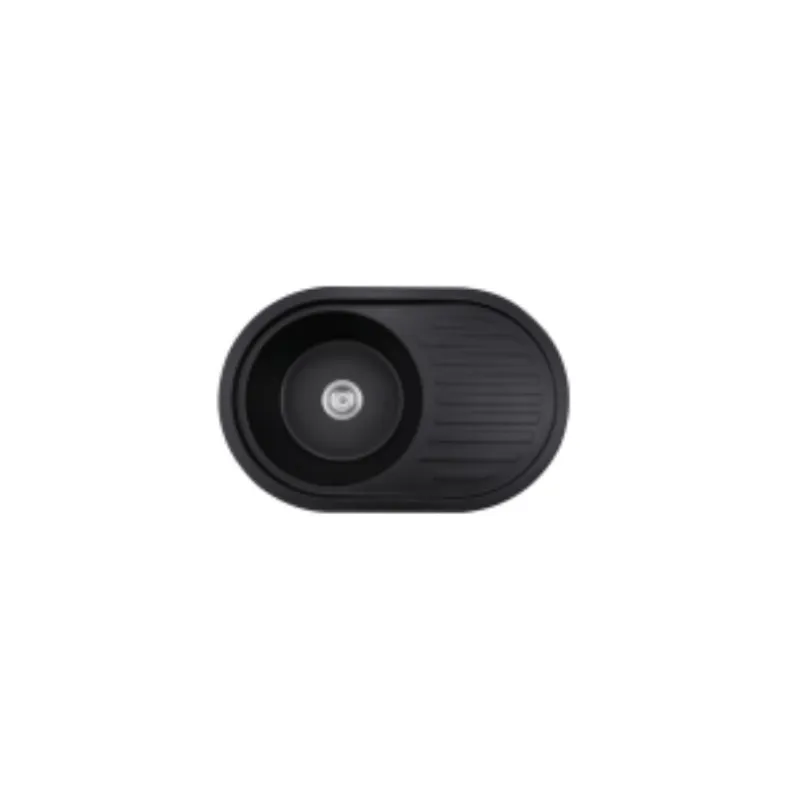
For a sense of how these configurations look as finished products, the catalogue includes the 510A and 510B variants, the larger 11650 format, and the full product range.
Next step
KAIRUISHENG supplies quartz composite kitchen sinks to importers, distributors and wholesalers from Guangdong, China. If you are planning a size matrix, send your target cabinet widths, preferred bowl configurations and colour direction to Cyndi@kairuisheng.com or message +86 13434825666 on WhatsApp, and we will map your range against the models we can supply, with dimensions and carton data for each.